
Why Learning About Voyager 1 and 2 Is So Powerful for Middle and High School Science

Some science topics are useful because they teach important facts. Some are powerful because they build skills. And then there are topics like Voyager 1 and Voyager 2, which do both at the same time while also giving students a genuine sense of wonder.
That is one of the biggest reasons I think Voyager 1 and 2 are such valuable topics for middle and high school science. These missions are not just old spacecraft from the 1970s.
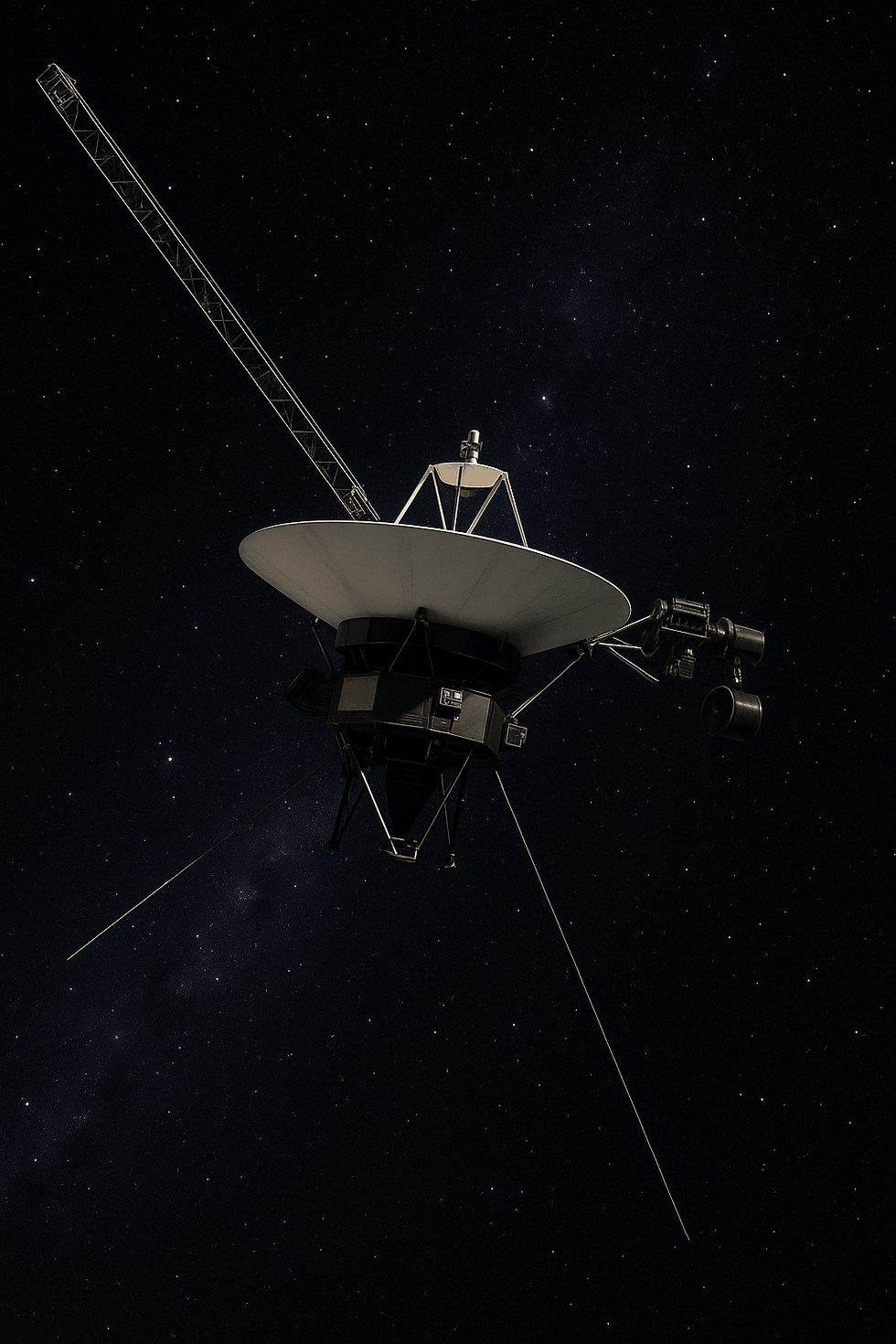
They are living examples of how physics, astronomy, engineering, communication technology, long-term scientific thinking, and human curiosity all come together in one extraordinary story.
If you want a classroom-ready resource built specifically around this topic, the most direct place to start is here:
This bundle is especially appealing because it does not treat Voyager as just a reading passage or just a slideshow. It approaches the topic from multiple directions, which is exactly what makes space science stick for students.
Why Voyager 1 and 2 matter so much in science class
Voyager 1 and Voyager 2 matter because they help students see science as a connected system rather than a set of isolated facts. When students learn about these spacecraft, they are not only learning about “space probes.”
They are learning about:
gravity assists
planetary motion
energy and power in deep space
communication across enormous distances
spacecraft design
scientific instruments
data collection
long-term missions and persistence in science
That range is what makes Voyager such a rich teaching topic. It does not sit neatly in just one corner of the curriculum. It crosses into physics, Earth and space science, engineering, and mathematics in a very natural way.
Students also tend to remember Voyager because the mission story is genuinely compelling. The idea that spacecraft launched decades ago are still humanity’s messengers in deep space is the kind of scientific story that students do not forget easily.
Voyager helps students understand that science is built over time
One of the best things about teaching Voyager 1 and 2 is that it helps students move beyond the idea that science is about quick answers. Voyager shows them something much more important: real science often unfolds over years, decades, and even generations.
These missions reveal that:
big discoveries can take a long time
good engineering is built for endurance
scientific data continues to matter long after launch
exploration is often patient, cumulative, and collaborative
This is especially valuable for middle and high school students because many of them experience science only through short classroom tasks. Voyager gives them a model of science as a long-term human project.
That is a powerful message.
Voyager 1 and 2 make gravity assists easier to teach
Gravity assists can be a difficult concept for students because they combine motion, energy, and orbital mechanics in ways that are not always easy to picture. Voyager gives you a concrete, memorable example.
Instead of teaching gravity assists as an isolated physics idea, you can teach them as part of a real mission challenge: How do you send a spacecraft to the outer planets without carrying impossible amounts of fuel?
That question is instantly more interesting than a dry definition. Voyager gives students a real-world reason to care about the answer.
This is also where a structured resource bundle can make a big difference. The Voyager 1 and 2 Focus Unit Bundle includes 30 visually strong slides, which is extremely helpful for teaching ideas like gravity assists and mission pathways step by step. Strong visuals matter a lot in space science because students need help building a mental picture of what is happening.
Voyager turns space into real evidence and real science
Another reason Voyager is such a good topic is that it helps students understand how we actually know things about distant worlds.
Students often see finished textbook facts about Jupiter, Saturn, Uranus, and Neptune, but they do not always stop to think about how those facts were discovered. Voyager helps bridge that gap. It shows students that scientific knowledge comes from:
instruments
measurement
evidence
transmission of data
interpretation by scientists
That is a much richer way to teach astronomy than simply listing what the outer planets are like.
Voyager also helps students understand that robotic missions matter deeply in science. Students sometimes assume that the most exciting exploration has to involve humans. Voyager is a brilliant reminder that robotic spacecraft can transform science in extraordinary ways.
It is one of the best topics for combining science and engineering
Voyager is not just an astronomy topic. It is also an engineering topic. That matters because many students are drawn toward building, design, and problem solving.
Voyager lets you talk about:
spacecraft instruments
protecting systems in extreme environments
power systems for deep space
communication over vast distances
designing missions that must keep working for decades
This makes the topic especially useful if you want to connect science learning to STEM pathways more broadly.
The included research project template in the bundle supports this beautifully. According to the resource description, students can explore:
a one paragraph summary
a mathematics connection using scale, speed, and mission timing
an engineering or technological connection through instruments and communication
a five-term glossary
three challenging inquiry questions
and a creative space for communicating learning in an original way
That structure is extremely useful because it turns student curiosity into something organized and manageable.
Voyager is excellent for science literacy
If you want to build science literacy, Voyager is a strong topic because it naturally encourages students to read for meaning, interpret scientific ideas, and explain them back clearly.
One of the strongest parts of this bundle is that it includes two 3-page reading passages with questions:
one higher-level version
one more accessible version for younger students or those who need extra support
That kind of differentiation is incredibly helpful in real classrooms. It means the same topic can work across a wider range of learners without forcing you to build two separate lessons from scratch.
If science literacy is one of your priorities, this dual-passage structure is a real strength. It means students can engage with the same core ideas while still getting appropriate support.
If you want to browse more space-science materials in the same general ecosystem, the main store homepage is here:
Voyager works well in many lesson formats
One of the most practical things about this topic is its flexibility. Voyager 1 and 2 can work in many different teaching situations, especially when you have a multi-format bundle rather than a single worksheet.
Based on the bundle description, this resource can be used for:
substitute teaching
lesson openers
extension work
lesson fillers when class moves quickly
homework
flipped classroom use
visual learning
auditory learning
the core of a focused mini-unit
That flexibility matters. Teachers do not just need good content. They need content that can survive real classroom life.
A topic like Voyager is especially good for this because it already contains a strong narrative arc. Students are more willing to read, listen, discuss, and write when the topic itself feels like a story.
Why the podcast, infographic, slides, quiz, reading, and research combination works so well
The bundle includes:
3 infographics
1 podcast/audio deep dive of about 14 minutes
30 slides
8 pages of quiz questions and answers
7 pages of research template materials
2 reading passages with questions
That mix is part of what makes it feel classroom-ready rather than just interesting.
Here is why each part matters.
Infographics
Infographics help students retain the big picture. They are especially useful for revision, classroom display, or a quick visual summary at the end of a lesson.
Audio podcast
A podcast gives students a different access point into the topic. Some students genuinely understand more when they can hear concepts explained conversationally. It also makes the bundle more useful for homework or flipped learning.
Slides
Slides are still one of the most practical ways to teach a new space science topic clearly, especially when they are visual and content-rich.
Quiz material
The quiz structure is especially strong because it includes:
15 multiple choice questions
10 short answer questions
5 essay-style prompts
glossary support
answers or answer pointers
That makes it much easier to assess understanding at different depths.
Reading passages
These support science literacy, differentiation, and independent work.
Research project template
This is where students move from receiving information to actually doing something with it.
Together, these pieces create a real sequence rather than a one-off activity.
Voyager 1 and 2 are also emotionally memorable
This is something teachers sometimes underestimate, but it matters.
Voyager 1 and 2 are memorable not only because of the science, but because of what they represent. They are about exploration, persistence, scale, and the human desire to understand what lies beyond our immediate reach.
Students often respond strongly to the idea that:
these spacecraft were launched decades ago
they traveled farther than almost anything humans have ever built
they continue to send information back
they carry a record of humanity
That emotional dimension is not separate from the science. It helps students care enough to think harder.
And caring is often the first step toward deeper learning.
A simple way to use this bundle as a mini-unit
If you want to use the Voyager 1 and 2 Focus Unit Bundle as a short focused sequence, one practical structure could look like this:
Lesson 1
Use the slides and infographic to introduce the missions, where they went, and why they mattered.
Lesson 2
Assign the reading passage at the appropriate level and discuss the key ideas as a class.
Lesson 3
Use the podcast as reinforcement, either in class or for homework.
Lesson 4
Move into the research project template so students can explore one key aspect more independently.
Lesson 5
Use the quiz questions for retrieval, review, and deeper explanation.
That is a tidy, varied, and coherent mini-unit without requiring you to invent every step yourself.
Why Voyager is good and interesting to learn about
If I had to summarize it simply, Voyager 1 and 2 are worth learning about because they show students that science is:
imaginative
evidence-based
collaborative
long-term
engineering-rich
mathematically meaningful
and deeply human
They make abstract ideas like gravity assists, communication delay, and spacecraft design feel real.
They also help students understand that some of the greatest achievements in science are not quick or flashy. They are patient, careful, and built to last.
That is a message worth teaching.
Final thoughts
If you are teaching middle or high school science and you want a topic that combines physics, astronomy, engineering, literacy, and genuine wonder, Voyager 1 and 2 are hard to beat.
And if you want a way to teach that topic clearly without building a whole unit from scratch, the Voyager 1 and 2 Focus Unit Bundle | 6 Resources Including Quiz looks like a very strong option.
It gives you multiple teaching formats, built-in differentiation, structured assessment, and extension opportunities, all around one of the best stories in space science.
For teachers who want space science to feel rich, memorable, and manageable, that is a very useful combination.
Thanks for reading
Cheers and stay curious
Oliver - The Teaching Astrophysicist

